The Cosmic Horror of Banality: A Critical Analysis of Hug the Sun
By Tom Cash - Posted Jan 23, 2026
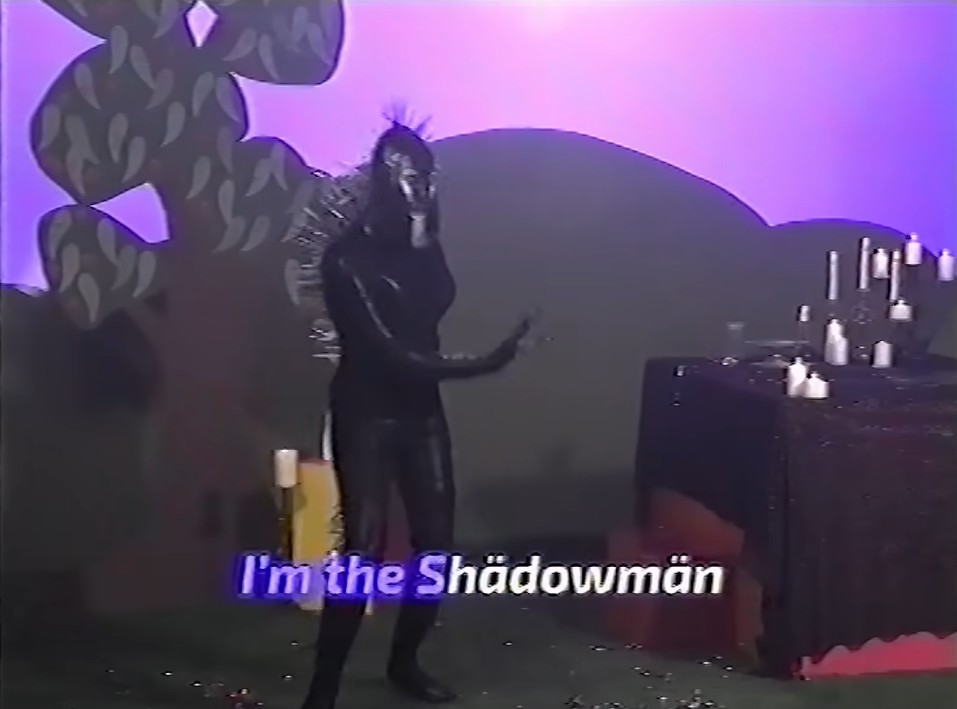
There’s a clip circulating social media around the time of this writing; maybe you’ve seen it. It features a heavily bearded man dressed in black, spiky costume and dancing around claiming to be The Shadowman. He is confronted by two men, to one of whom he shows his fingers, causing the man to cough up a perfectly formed turd.
Presented without context, it has left many viewers wanting more, and a knowledgeable few that recognize the source materially playfully hinting as to its source. Me? I just Googled "viral shadowman skit". Sometimes I think people forget Google exists and you can just ask it stuff and it’ll give you answers. No guarantee on the veracity of those answers, alas.
I’m the kind of person, though, that dives deep when I find something that resonates with me. What starts as an animated gif or a popular video clip turns into me absorbing the entire catalog of a specific entertainer. It’s how I discovered The Mighty Boosh, Blame Society Films, Auralnauts, and many others, and it’s really never failed me.
So naturally I sought out the original webseries, posted in 2021 by Grouse House, by an Australian comedy outfit known as Haven’t You Done Well Productions.
I was not disappointed.
From the moment the screen adjusts to 4:3 to accommodate what is reported to be a long lost VHS recording, digitized and uploaded for the world to see, I knew I was in for something special. It was ringing my Tim & Eric bell quite loudly, with intentionally slapdash production values, manufactured signal degradation, random inserts of other productions such as a commercial or a sporting event, sudden cuts, and other tricks made to emulate a creator that wasn’t very good at their craft, relevant to the time the show was purported to exist. When the starburst graphic hit my screen, I was grinning from ear-to-ear.
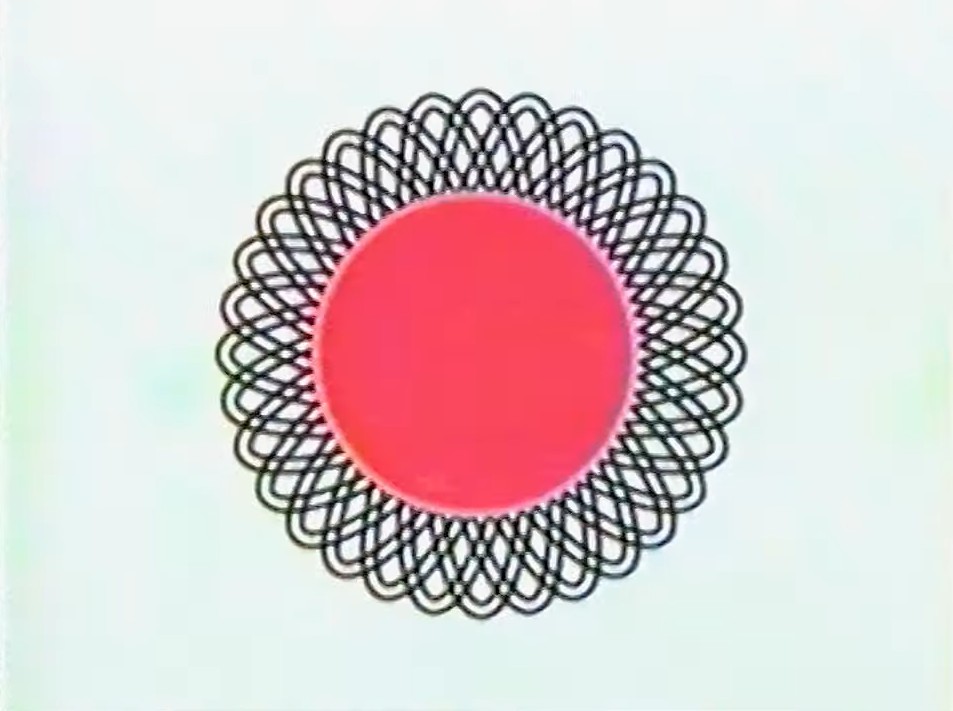
I wonder how much a Spirograph would go for on eBay these days?
What follows is around eight-to-ten minutes of oddly subdued chaos that feels less like an absurdist parody of religious children’s programming, and more like some murky artifact from another universe altogether, a universe where grotesque social and physical breakdowns are common and procedural. A far-flung alternative reality populated by people that never learned to distinguish comfort from control, or revelation from untreated mental illness. With deep undertones of cosmic horror surrounding the sun god Oxtos (who is invoked frequently and reverently), the true dread comes not from writhing masses of tentacles, it comes from the show’s insistence that everything you’re seeing is perfectly normal, a conceit which is constantly reinforced with footage of the live studio audience of fidgeting children watching the proceedings with glazed expressions. It’s as if Lovecraft were a devotee of one of his own gods, got into children’s television instead of writing, and tried to convey the subtle ontological horror of suburbia.
Central to the entire six episode series is Gary, an enigmatic authority figure whose benevolent mission is to spread the word of Oxtos. Unfortunately, Gary is currently in jail awaiting trial for a variety of alleged crimes including fraud, counterfeiting, and resisting arrest. Ten thousand dollars is needed to bail Gary out of jail, and viewers are encouraged to pawn jewelry, break open piggybanks, and sell family pets to help gather the needed funds. It also becomes evident, after numerous breakaway scenes, that Gary is not dealing with a full deck of cards, and is very likely a transient. Later in the series we discover that Gary is absolutely a con artist, which makes his ultimate fate even more interesting.
One episode ends with an oft-alluded to villain, The Shadowman, who faces down two of the show’s hosts, Trent and BJ. As detailed earlier in this article, the mere observation of Shadowman’s fingers is enough to cause BJ to defecate from his mouth. Then BJ evidently has a psychotic break and forgets he’s filming a segment for a children’s TV show, and punches the actor playing Shadowman in the face, abruptly halting production.
A lot of people are saying this reminds them of Always Sunny in Philadelphia, and I can see it, but my mind went immediately to the Boosh.
Throughout each episode there are peppered B-roll segments featuring Linda, an awkward, manically pleasant woman dressed like a My Buddy doll and given to standing in weird, uncomfortable poses that are ostensibly struck to make her feel more relatable to her audience. It, in fact, has the opposite effect
The overall effect is one of mild to medium discomfort, depending upon your personal tolerance, and the laughter comes at the price of having to wade through extremely challenging sequences, such as a stage illusionist who is distraught to the point of a meltdown because the birds he used for his act were all shot to death by police officers moments before his scheduled appearance.

I would have been unhappy too!
Hug the Sun does something few parodies succeed at, and that is to forget that it’s a parody. It doesn’t over-signal. Even the bizarrely inappropriate responses to situations have the effect of flattening the narrative rather than inflating it. Its power lies in its refusal to escalate. In the end, Linda is thrown to the wolves, Gary the second prophet is burned to death by Oxtos, BJ is hit by a car in a post-DMT psychosis, and Trent becomes the new prophet. Nothing is learned. Nothing is corrected.
It says: this is what passes for acceptable children’s programming on broadcast television, this is what devotion feels like, and this is what authority sounds like. In the end, one is left with the impression that the show wasn’t so finished as it was abandoned, like it was never meant for public consumption.